最近在学习造核弹,刚好碰到 Dragonfly 群里,来自蚂蚁金服的巴德大佬在直播分享另外一个子项目Nydus。
按照我的理解,Nydus是下一代容器格式的一种实现。其存在主要是为了解决旧的容器格式(container format)存在的问题。
那么问题来了,什么是 Nydus?什么是 container format? Nydus 具体解决了什么问题。这里先来一波名词扫盲。
名词扫盲
实际上,容器技术从1979年发展至今已经超过40年,docker 只能说是目前为止,其中一种比较著名而流行的实现。可以说,docker 解决了应用分发的难题,为日后 kubernetes 的流行奠定了基础。
但是,俗话说得好,勇士战胜恶龙之日,自身亦化作恶龙。不管是 Docker 公司后来各种神操作(把项目改名 Moby ,docker swarm 的弱鸡编排)也好,CoreOS 的崛起也罢,开源世界的战争,是一种技术标准的全球话语权争夺,这种争夺远比你想象的要残酷。
OCI
OCI全称 Open Container Initiative ,隶属于Linux基金会,是Docker, CoreOS联合其他容器厂商,于 2015-6-22 建立的一个开源组织。其目的主要是为了制定容器技术的通用技术标准。
OCI旗下主要有2个项目:
OCIv1
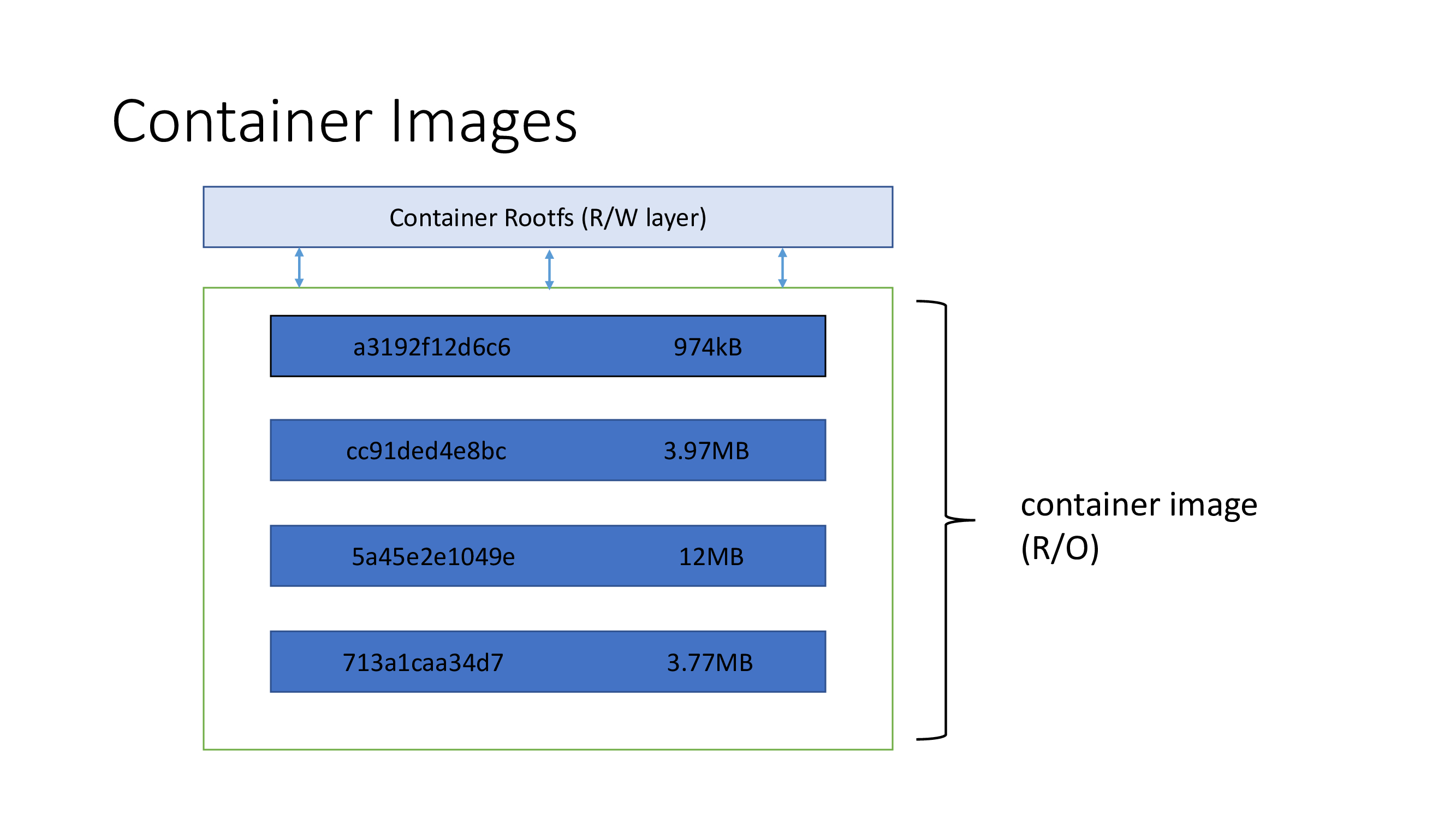
OCIv1 就是目前的容器格式。
OCIv2
OCIv2 就是为了解决 OCIv1 的历史技术债务。
Dragonfly Nydus
2020年4 月 10 日,由云原生计算基金会(CNCF)技术监督委员会投票决议,来自中国的开源项目 Dragonfly 正式晋升为 CNCF 孵化级别的托管项目,成为继 Harbor、TiKV 之后,第三个进入 CNCF 孵化阶段的中国项目。
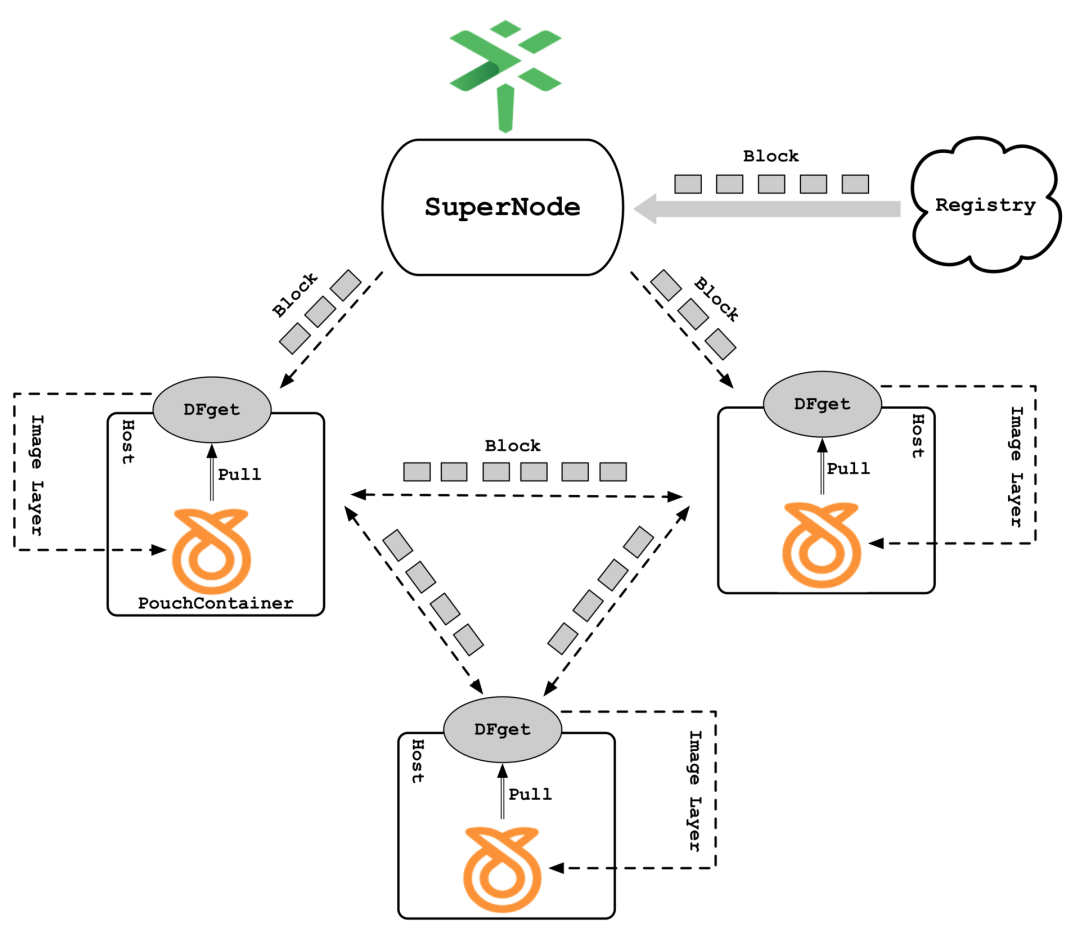
Dragonfly 的架构主要是为了解决了大规模镜像下载、远距离传输、带宽成本控制、安全传输这四大难题。
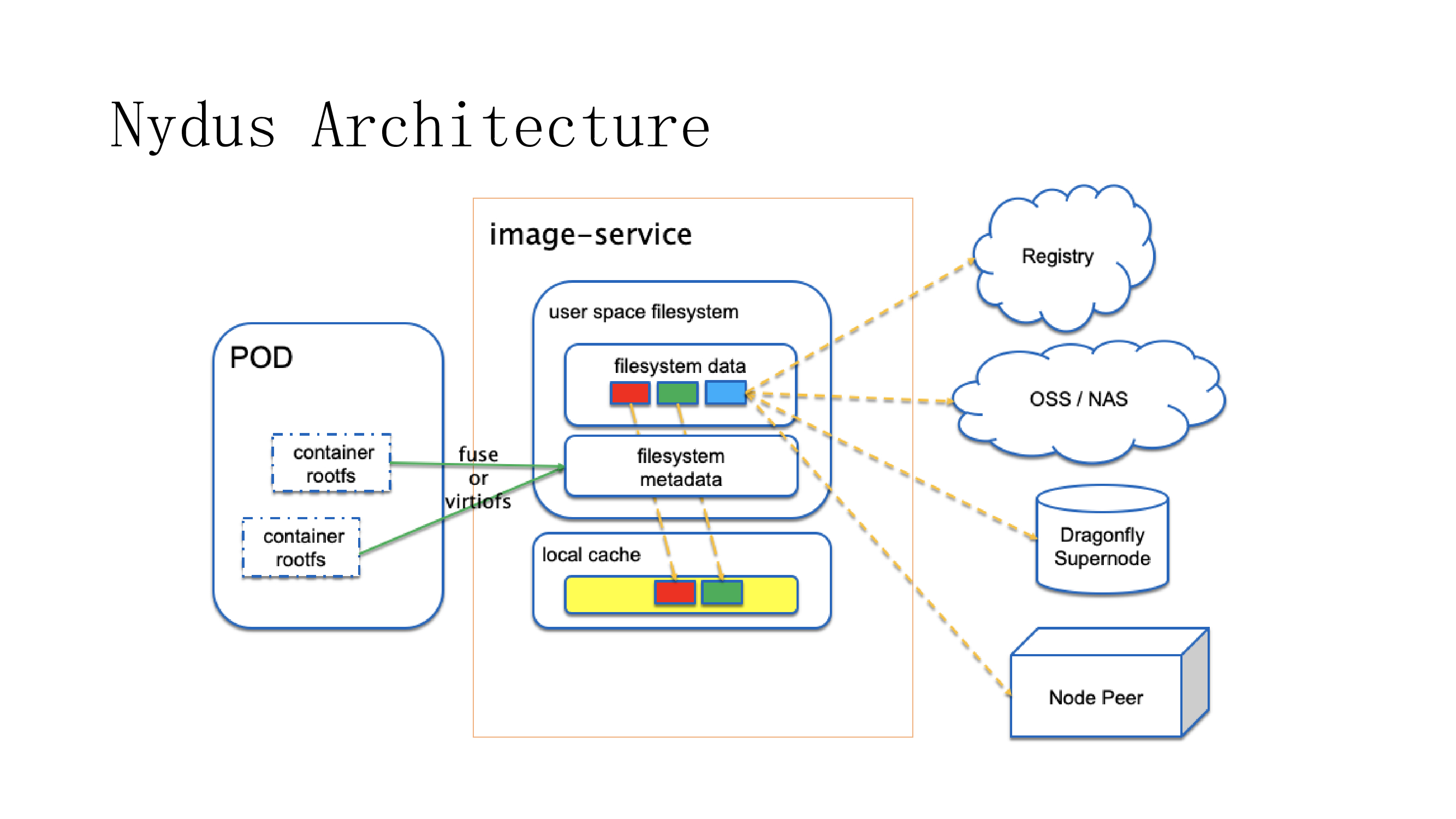
Nydus 是OCIv2的一种实现,计划捐给 Dragonfly ,作为其旗下一个子项目运作。
当前容器格式的问题
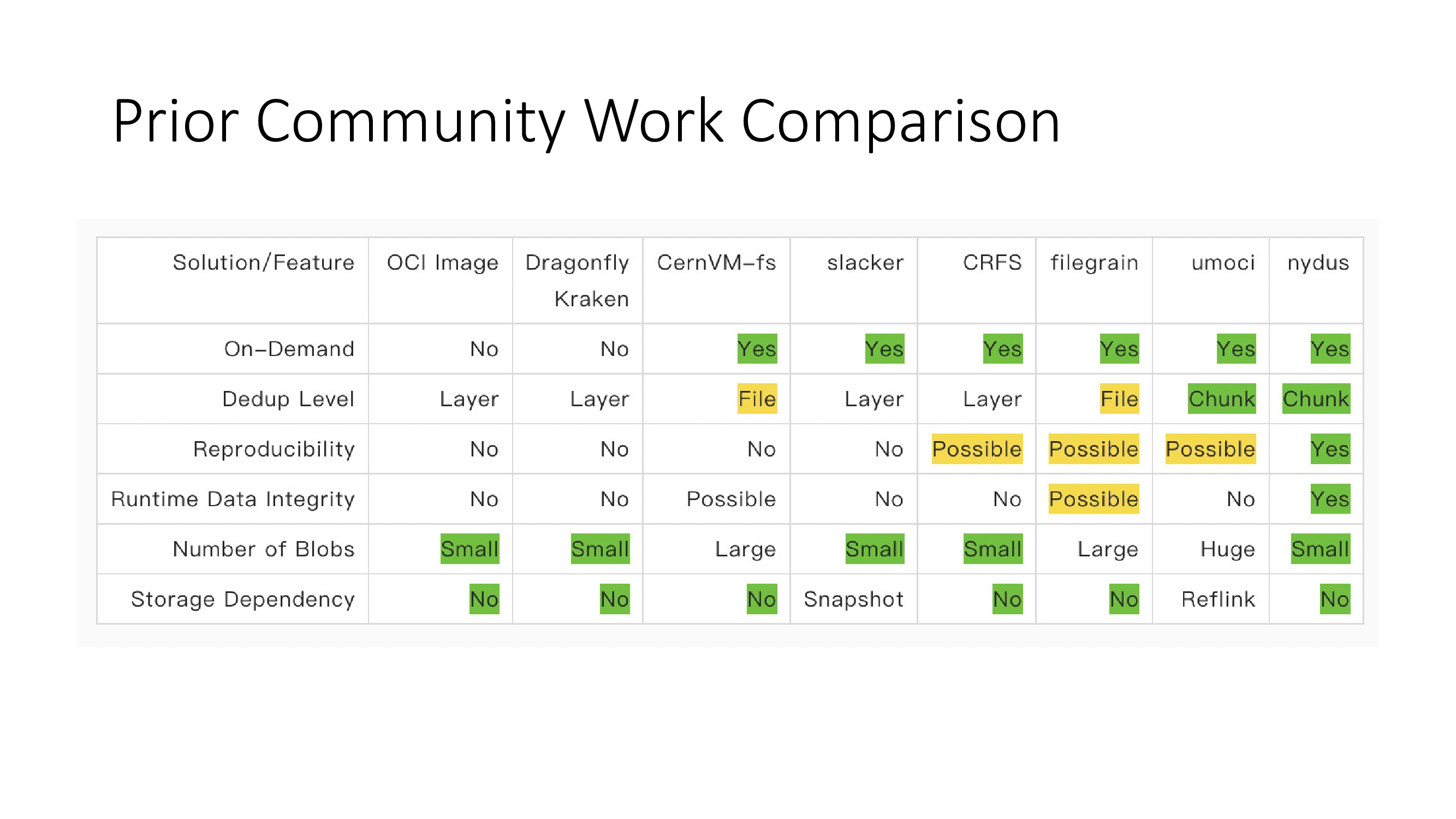
在直播分享中,巴德大佬提到了OCIv1的几个问题:
- 分层效率很低
- 数据没有校验
- 可重建性问题
分层效率很低

分层效率低主要是指冗余性。如果把 docker image 比喻作汉堡包,镜像A是吉士汉堡包。
1
FROM centos

镜像B是双层吉士汉堡包。
1
2
FROM centos
RUN yum update -y
1
2
3
4
# 拉取吉士汉堡包
docker pull h1
# 拉取双层吉士汉堡包
docker pull h2
那么按照目前的设计,镜像之间是独立的,也就是说,拉取h1之后,虽然磁盘里面已经缓存了 centos 的底层镜像,但是拉取h2的时候,还是重新拉取整个镜像,并没有复用 centos 那个底层镜像。最终导致了磁盘的冗余和网络流量的浪费。
分层效率低还有另外一个体现。
1
2
3
4
5
FROM ubuntu:14.04
ADD compressed.tar /
# 这里的删除只是一个标记,实际镜像大小 = compressed.tar * 2 + ubuntu:14.04
RUN rm /compressed.tar
ADD compressed.tar /
像这个 docker image ,实际在运行的时候, container 里面的根目录大小比镜像小得多。
所以,镜像大小和容器大小有着本质的区别。
数据没有校验(Verifiability)
这里稍加引述巴德大佬的话:
只读层被修改了,容器应用是不知道的。现在的OCI镜像格式下就有可能发生这种事情,镜像在构建和传输过程中是可校验的,但是镜像下载到本地后会被解压,解压后的文件的修改是无法探知的。
镜像需要下载,解压到本地文件系统,然后再交给容器去使用。这个流程中,解压到本地文件系统这一步是丢失可信的关键。
workspace 可重建性问题(repairability)
可重建性可以从某种程度上解决 docker build 慢的问题。
以轻量级 kubernetes event导出组件 kube-eventer为例,
1
2
3
4
5
6
7
8
9
10
11
12
13
14
15
16
17
18
19
FROM golang:1.14 AS build-env
ADD . /src/github.com/AliyunContainerService/kube-eventer
ENV GOPATH /:/src/github.com/AliyunContainerService/kube-eventer/vendor
ENV GO111MODULE on
WORKDIR /src/github.com/AliyunContainerService/kube-eventer
RUN apt-get update -y && apt-get install gcc ca-certificates
RUN make


FROM alpine:3.10

COPY --from=build-env /src/github.com/AliyunContainerService/kube-eventer/kube-eventer /
COPY --from=build-env /etc/ssl/certs/ca-certificates.crt /etc/ssl/certs/

ENV TZ "Asia/Shanghai"
RUN apk add --no-cache tzdata
COPY deploy/entrypoint.sh /

ENTRYPOINT ["/kube-eventer"]
我们在机器A上反复执行docker build,每次的构建都是原子的,也就是说,每一次都是从上到下重新跑一遍。但实际上我们知道,很多指令都是重复的,没有必要重复执行。
可重建性还有另外一层意思,从机器A拷贝到机器B之后,继续构建docker image。
我的吐槽
在我看来,目前的 OCIv1 借鉴了 git 的设计,但本质是一个很难吃的汉堡包。只有最上面一层可以吃(读写)。
云原生应用的交付周期,一般是
git Ops –> CI –> docker image –> waiting container/pod(docker pull,sandbox etc) –> running container/pod –> terminated container/pod
云原生应用的安全性由运行时环境和 docker container 组成,一个安全的 docker container ,应当尽量让它在各个环节里面,都没有可乘之机。
比如,从代码到CI的过程中,应当有静态代码分析 + 人工 code review 的机制,确保代码无安全性上的问题;从CI到 docker image 的构建过程中,应当让CI运行在一个可信的环境。这个可信的环境包括了可信的权威DNS,可控的安全防火墙,受限的网络连接以及安全扫描套件(杀毒软件)。
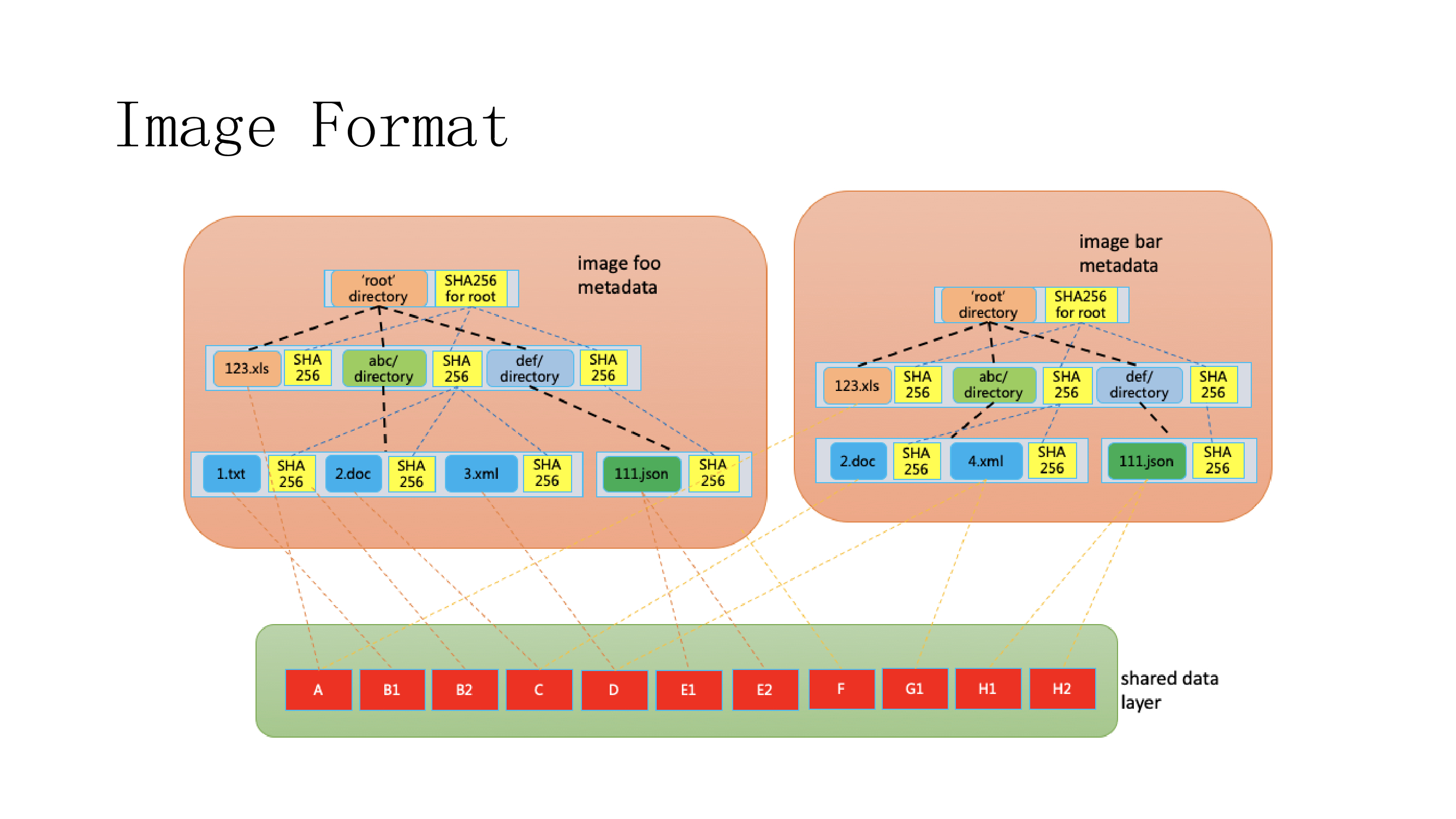
从这个层面上讲,Nydus 计算每一层哈希,不仅不是很专业,而且很慢。这一块内容交给更高效的安全引擎,Nydus 做个异步事件回调/消息发布订阅,也许更好。
综上所述,结合短桶原理,可以得出这样的结论:容器的安全性需要各方协调,云原生应用不存在绝对意义上的安全。
最后,欢迎大家加入Dragonfly项目,项目钉群群主是《Docker源码分析》的作者孙宏亮。在国内《21天学会XX》垃圾技术书风行的大背景下,这本书是一股清流。
同时也欢迎大家参与OCIv2标准的共建。
结论
PPT first,bug secondly.
我想暗中买一批孙宏亮大佬写的第一版《Docker源码分析》,之后再潜入阿里云,要到他的亲笔签名,最后再转卖出去🤣

参考链接
[1] docker、oci、runc以及kubernetes梳理 https://xuxinkun.github.io/2017/12/12/docker-oci-runc-and-kubernetes/
[2] About the Open Container Initiative https://opencontainers.org/about/overview/
[3] The Road to OCIv2 Images: What’s Wrong with Tar? https://www.cyphar.com/blog/post/20190121-ociv2-images-i-tar
[4] 重磅 | Dragonfly 晋升成为 CNCF 孵化项目 https://developer.aliyun.com/article/754452
[5] Dockerfile 操作建议 https://jiajially.gitbooks.io/dockerguide/content/chapter_fastlearn/dockerfile_tips.html
[6] 利用暴露在外的API,无法检测的Linux恶意软件将矛头指向Docker服务器 https://mp.weixin.qq.com/s?__biz=MzA5OTAyNzQ2OA==&mid=2649710368&idx=1&sn=afc957a5622a9bb658aa63574368400e&chksm=88936043bfe4e95563e6d8ca05c2bce662338072daa58f2ffd299ecbf26a7b57e33b5c871e4c&mpshare=1&scene=23&srcid=0803MLplml3bb8uyaXAyC2Rg&sharer_sharetime=1596696405119&sharer_shareid=9b8919de2238b20229856a42c8974cdc%23rd
Recently I’ve been learning how to build nuclear bombs, and I happened to come across a live stream in the Dragonfly group where Ba De, a big shot from Ant Financial, was sharing another sub-project called Nydus.
Based on my understanding, Nydus is an implementation of the next-generation container format. It exists mainly to solve problems with the old container format.
So the question is: What is Nydus? What is a container format? What specific problems does Nydus solve? Let’s start with some terminology.
Terminology
In fact, container technology has been developing for over 40 years since 1979. Docker can only be said to be one of the more famous and popular implementations so far. It can be said that Docker solved the problem of application distribution and laid the foundation for the future popularity of Kubernetes.
However, as the saying goes, when the warrior defeats the dragon, he himself becomes the dragon. Whether it’s Docker Inc.’s later various operations (renaming the project to Moby, Docker Swarm’s weak orchestration) or CoreOS’s rise, the war in the open source world is a global battle for discourse power over technical standards, and this battle is far more brutal than you imagine.
OCI
OCI stands for Open Container Initiative, which belongs to the Linux Foundation. It is an open source organization established on 2015-6-22 by Docker, CoreOS, and other container vendors, with the main purpose of establishing common technical standards for container technology.
OCI has two main projects:
OCIv1
OCIv1 is the current container format.
OCIv2
OCIv2 is designed to solve the historical technical debt of OCIv1.
Dragonfly Nydus
On April 10, 2020, through a vote by the CNCF Technical Oversight Committee, the open source project Dragonfly from China officially became a CNCF incubating project, becoming the third Chinese project to enter the CNCF incubation stage after Harbor and TiKV.
Dragonfly’s architecture is mainly designed to solve four major problems: large-scale image downloads, long-distance transmission, bandwidth cost control, and secure transmission.
Nydus is an implementation of OCIv2, planned to be donated to Dragonfly and operated as a sub-project under it.
Problems with Current Container Format
In the live stream, Ba De mentioned several problems with OCIv1:
- Very low layer efficiency
- No data verification
- Repairability issues
Very Low Layer Efficiency
Low layer efficiency mainly refers to redundancy. If we compare a docker image to a hamburger, image A is a cheeseburger.
1
FROM centos
Image B is a double cheeseburger.
1
2
FROM centos
RUN yum update -y
1
2
3
4
# Pull the cheeseburger
docker pull h1
# Pull the double cheeseburger
docker pull h2
According to the current design, images are independent of each other. That is, after pulling h1, although the underlying centos image is already cached on disk, when pulling h2, it still pulls the entire image again without reusing the underlying centos image. This ultimately leads to disk redundancy and wasted network traffic.
Low layer efficiency has another manifestation.
1
2
3
4
5
FROM ubuntu:14.04
ADD compressed.tar /
# The deletion here is just a marker, actual image size = compressed.tar * 2 + ubuntu:14.04
RUN rm /compressed.tar
ADD compressed.tar /
For this docker image, when actually running, the root directory size in the container is much smaller than the image.
So, image size and container size are fundamentally different.
No Data Verification (Verifiability)
Here’s a quote from Ba De:
If a read-only layer is modified, the container application doesn’t know. This can happen with the current OCI image format. Images are verifiable during construction and transmission, but after the image is downloaded locally, it will be decompressed, and modifications to the decompressed files cannot be detected.
Images need to be downloaded, decompressed to the local file system, and then handed over to the container for use. In this process, the step of decompressing to the local file system is where trust is lost.
Workspace Repairability Issues
Repairability can solve the problem of slow docker build to some extent.
Taking the lightweight Kubernetes event export component kube-eventer as an example:
1
2
3
4
5
6
7
8
9
10
11
12
13
14
15
16
17
18
19
FROM golang:1.14 AS build-env
ADD . /src/github.com/AliyunContainerService/kube-eventer
ENV GOPATH /:/src/github.com/AliyunContainerService/kube-eventer/vendor
ENV GO111MODULE on
WORKDIR /src/github.com/AliyunContainerService/kube-eventer
RUN apt-get update -y && apt-get install gcc ca-certificates
RUN make


FROM alpine:3.10

COPY --from=build-env /src/github.com/AliyunContainerService/kube-eventer/kube-eventer /
COPY --from=build-env /etc/ssl/certs/ca-certificates.crt /etc/ssl/certs/

ENV TZ "Asia/Shanghai"
RUN apk add --no-cache tzdata
COPY deploy/entrypoint.sh /

ENTRYPOINT ["/kube-eventer"]
When we repeatedly execute docker build on machine A, each build is atomic, meaning each time it runs from top to bottom again. But actually we know that many instructions are repeated and don’t need to be executed repeatedly.
Repairability also means another thing: after copying from machine A to machine B, continue building the docker image.
My Thoughts
In my opinion, the current OCIv1 borrows from git’s design, but is essentially a hamburger that’s hard to eat. Only the top layer can be eaten (read-write).
The delivery cycle of cloud-native applications is generally:
git Ops –> CI –> docker image –> waiting container/pod (docker pull, sandbox etc) –> running container/pod –> terminated container/pod
The security of cloud-native applications consists of the runtime environment and docker container. A secure docker container should try to leave no opportunities for exploitation at every stage.
For example, in the process from code to CI, there should be static code analysis + manual code review mechanisms to ensure there are no security issues in the code; in the process from CI to docker image construction, CI should run in a trusted environment. This trusted environment includes trusted authoritative DNS, controllable security firewalls, restricted network connections, and security scanning suites (antivirus software).
From this perspective, Nydus calculating the hash of each layer is not only not very professional, but also slow. This content should be handed over to a more efficient security engine, and Nydus should do asynchronous event callbacks/message pub-sub, which might be better.
In summary, combined with the short barrel principle, we can draw this conclusion: Container security requires coordination from all parties, and cloud-native applications are not absolutely secure.
Finally, welcome everyone to join the Dragonfly project. The project DingTalk group owner is Sun Hongliang, author of “Docker Source Code Analysis”. In the context of domestic “Learn XX in 21 Days” garbage technical books being popular, this book is a breath of fresh air.
Also welcome everyone to participate in co-building the OCIv2 standard.
Conclusion
PPT first, bug secondly.
I want to secretly buy a batch of the first edition of “Docker Source Code Analysis” written by Sun Hongliang, then infiltrate Alibaba Cloud to get his autograph, and finally resell it 🤣
References
[1] docker、oci、runc以及kubernetes梳理 https://xuxinkun.github.io/2017/12/12/docker-oci-runc-and-kubernetes/
[2] About the Open Container Initiative https://opencontainers.org/about/overview/
[3] The Road to OCIv2 Images: What’s Wrong with Tar? https://www.cyphar.com/blog/post/20190121-ociv2-images-i-tar
[4] 重磅 | Dragonfly 晋升成为 CNCF 孵化项目 https://developer.aliyun.com/article/754452
[5] Dockerfile 操作建议 https://jiajially.gitbooks.io/dockerguide/content/chapter_fastlearn/dockerfile_tips.html
[6] 利用暴露在外的API,无法检测的Linux恶意软件将矛头指向Docker服务器 https://mp.weixin.qq.com/s?__biz=MzA5OTAyNzQ2OA==&mid=2649710368&idx=1&sn=afc957a5622a9bb658aa63574368400e&chksm=88936043bfe4e95563e6d8ca05c2bce662338072daa58f2ffd299ecbf26a7b57e33b5c871e4c&mpshare=1&scene=23&srcid=0803MLplml3bb8uyaXAyC2Rg&sharer_sharetime=1596696405119&sharer_shareid=9b8919de2238b20229856a42c8974cdc%23rd
最近、核弾の作り方を学んでいて、ちょうどDragonflyのグループで、アリペイのバデさんが別のサブプロジェクトNydusをライブストリームで共有しているのを見かけました。
私の理解では、Nydusは次世代コンテナフォーマットの実装です。その存在は主に古いコンテナフォーマット(container format)の問題を解決するためです。
では、Nydusとは何か?container formatとは何か?Nydusは具体的にどのような問題を解決するのか。まず用語の説明から始めます。
用語の説明
実際、コンテナ技術は1979年から現在まで40年以上発展しており、dockerはこれまでのところ、より有名で人気のある実装の一つに過ぎません。dockerはアプリケーション配布の難題を解決し、後のkubernetesの流行の基礎を築いたと言えます。
しかし、よく言われるように、勇者が悪竜を倒す日、自身も悪竜となる。Docker社の後の様々な操作(プロジェクトをMobyに改名、docker swarmの弱いオーケストレーション)であれ、CoreOSの台頭であれ、オープンソース世界の戦争は、技術標準の世界的な発言権をめぐる争いであり、この争いは想像以上に残酷です。
OCI
OCIはOpen Container Initiativeの略で、Linux Foundationに属し、Docker、CoreOSが他のコンテナベンダーと共同で2015-6-22に設立したオープンソース組織です。その目的は主にコンテナ技術の共通技術標準を制定することです。
OCIには主に2つのプロジェクトがあります:
OCIv1
OCIv1が現在のコンテナフォーマットです。
OCIv2
OCIv2はOCIv1の歴史的技術的負債を解決するために設計されました。
Dragonfly Nydus
2020年4月10日、CNCF技術監督委員会の投票により、中国のオープンソースプロジェクトDragonflyが正式にCNCFインキュベーションレベルのホストプロジェクトに昇格し、Harbor、TiKVに続いて、CNCFインキュベーション段階に入った3番目の中国プロジェクトとなりました。
Dragonflyのアーキテクチャは主に大規模イメージダウンロード、長距離転送、帯域幅コスト制御、安全な転送という4つの主要な問題を解決するために設計されています。
NydusはOCIv2の実装で、Dragonflyに寄贈され、そのサブプロジェクトとして運営される予定です。
現在のコンテナフォーマットの問題
ライブストリームで、バデさんはOCIv1のいくつかの問題に言及しました:
- レイヤー効率が非常に低い
- データ検証がない
- 再構築可能性の問題
レイヤー効率が非常に低い
レイヤー効率の低さは主に冗長性を指します。docker imageをハンバーガーに例えると、イメージAはチーズバーガーです。
1
FROM centos
イメージBはダブルチーズバーガーです。
1
2
FROM centos
RUN yum update -y
1
2
3
4
# チーズバーガーをプル
docker pull h1
# ダブルチーズバーガーをプル
docker pull h2
現在の設計では、イメージは互いに独立しています。つまり、h1をプルした後、ディスクにcentosのベースイメージがキャッシュされていても、h2をプルする際には、centosのベースイメージを再利用せず、イメージ全体を再プルします。これにより、ディスクの冗長性とネットワークトラフィックの浪費が最終的に発生します。
レイヤー効率の低さには別の現れ方もあります。
1
2
3
4
5
FROM ubuntu:14.04
ADD compressed.tar /
# ここの削除は単なるマーカーで、実際のイメージサイズ = compressed.tar * 2 + ubuntu:14.04
RUN rm /compressed.tar
ADD compressed.tar /
このdocker imageの場合、実際に実行する際、container内のルートディレクトリサイズはイメージよりもはるかに小さくなります。
したがって、イメージサイズとコンテナサイズには根本的な違いがあります。
データ検証がない(Verifiability)
バデさんの言葉を引用します:
読み取り専用レイヤーが変更されても、コンテナアプリケーションはそれを知りません。現在のOCIイメージフォーマットでは、このようなことが起こる可能性があります。イメージは構築と転送中は検証可能ですが、イメージがローカルにダウンロードされると解凍され、解凍されたファイルの変更は検出できません。
イメージはダウンロードされ、ローカルファイルシステムに解凍され、その後コンテナに渡されて使用されます。このプロセスで、ローカルファイルシステムに解凍するステップが信頼を失う重要なポイントです。
workspaceの再構築可能性の問題(repairability)
再構築可能性は、ある程度docker buildの遅さの問題を解決できます。
軽量級kubernetesイベントエクスポートコンポーネントkube-eventerを例にします:
1
2
3
4
5
6
7
8
9
10
11
12
13
14
15
16
17
18
19
FROM golang:1.14 AS build-env
ADD . /src/github.com/AliyunContainerService/kube-eventer
ENV GOPATH /:/src/github.com/AliyunContainerService/kube-eventer/vendor
ENV GO111MODULE on
WORKDIR /src/github.com/AliyunContainerService/kube-eventer
RUN apt-get update -y && apt-get install gcc ca-certificates
RUN make


FROM alpine:3.10

COPY --from=build-env /src/github.com/AliyunContainerService/kube-eventer/kube-eventer /
COPY --from=build-env /etc/ssl/certs/ca-certificates.crt /etc/ssl/certs/

ENV TZ "Asia/Shanghai"
RUN apk add --no-cache tzdata
COPY deploy/entrypoint.sh /

ENTRYPOINT ["/kube-eventer"]
マシンAでdocker buildを繰り返し実行すると、各ビルドは原子的です。つまり、毎回上から下まで再実行されます。しかし、実際には多くの命令が繰り返されており、繰り返し実行する必要がないことがわかっています。
再構築可能性には別の意味もあります。マシンAからマシンBにコピーした後、docker imageの構築を続けることです。
私の考え
私の意見では、現在のOCIv1はgitの設計を参考にしていますが、本質的には食べにくいハンバーガーです。最上層だけが食べられます(読み書き)。
クラウドネイティブアプリケーションの配信サイクルは、一般的に:
git Ops –> CI –> docker image –> waiting container/pod(docker pull、sandbox etc) –> running container/pod –> terminated container/pod
クラウドネイティブアプリケーションのセキュリティは、ランタイム環境とdocker containerで構成されます。安全なdocker containerは、各段階で機会を残さないようにする必要があります。
例えば、コードからCIへのプロセスでは、静的コード解析+手動code reviewのメカニズムがあり、コードにセキュリティ上の問題がないことを確認する必要があります。CIからdocker imageの構築プロセスでは、CIを信頼できる環境で実行する必要があります。この信頼できる環境には、信頼できる権威DNS、制御可能なセキュリティファイアウォール、制限されたネットワーク接続、セキュリティスキャンスイート(ウイルス対策ソフトウェア)が含まれます。
この観点から、Nydusが各レイヤーのハッシュを計算することは、専門的ではないだけでなく、遅いです。この内容はより効率的なセキュリティエンジンに委ね、Nydusは非同期イベントコールバック/メッセージpub-subを行う方が良いかもしれません。
要約すると、短いバレル原理と組み合わせて、次の結論を導き出すことができます:コンテナのセキュリティはすべての当事者の協調を必要とし、クラウドネイティブアプリケーションは絶対的な意味でのセキュリティは存在しません。
最後に、Dragonflyプロジェクトへの参加を歓迎します。プロジェクトのDingTalkグループオーナーは「Dockerソースコード分析」の著者孫宏亮です。国内で「21日でXXを学ぶ」というゴミ技術書が流行している中、この本は清流です。
また、OCIv2標準の共同構築への参加も歓迎します。
結論
PPT first、bug secondly。
孫宏亮さんが書いた第一版「Dockerソースコード分析」を密かに大量購入し、その後アリクラウドに潜入してサインをもらい、最後に転売したい🤣
参考リンク
[1] docker、oci、runcおよびkubernetesの整理 https://xuxinkun.github.io/2017/12/12/docker-oci-runc-and-kubernetes/
[2] About the Open Container Initiative https://opencontainers.org/about/overview/
[3] The Road to OCIv2 Images: What’s Wrong with Tar? https://www.cyphar.com/blog/post/20190121-ociv2-images-i-tar
[4] 重要 | DragonflyがCNCFインキュベーションプロジェクトに昇格 https://developer.aliyun.com/article/754452
[5] Dockerfile操作の推奨事項 https://jiajially.gitbooks.io/dockerguide/content/chapter_fastlearn/dockerfile_tips.html
[6] 露出したAPIを利用し、検出不可能なLinuxマルウェアがDockerサーバーを標的に https://mp.weixin.qq.com/s?__biz=MzA5OTAyNzQ2OA==&mid=2649710368&idx=1&sn=afc957a5622a9bb658aa63574368400e&chksm=88936043bfe4e95563e6d8ca05c2bce662338072daa58f2ffd299ecbf26a7b57e33b5c871e4c&mpshare=1&scene=23&srcid=0803MLplml3bb8uyaXAyC2Rg&sharer_sharetime=1596696405119&sharer_shareid=9b8919de2238b20229856a42c8974cdc%23rd
Недавно я изучал, как создавать ядерные бомбы, и случайно наткнулся на прямую трансляцию в группе Dragonfly, где Ба Дэ, большой специалист из Ant Financial, делился другим подпроектом Nydus.
По моему пониманию, Nydus — это реализация формата контейнеров следующего поколения. Он существует главным образом для решения проблем старого формата контейнеров (container format).
Итак, вопрос: Что такое Nydus? Что такое container format? Какие конкретные проблемы решает Nydus? Начнём с терминологии.
Терминология
На самом деле, технология контейнеров развивается уже более 40 лет с 1979 года. Docker можно назвать лишь одной из более известных и популярных реализаций на данный момент. Можно сказать, что Docker решил проблему распространения приложений и заложил основу для будущей популярности Kubernetes.
Однако, как гласит поговорка, когда воин побеждает дракона, он сам становится драконом. Будь то последующие операции Docker Inc. (переименование проекта в Moby, слабая оркестрация docker swarm) или подъём CoreOS, война в мире open source — это глобальная борьба за право голоса в технических стандартах, и эта борьба гораздо более жестока, чем вы думаете.
OCI
OCI — это Open Container Initiative, принадлежащая Linux Foundation. Это открытая организация, основанная Docker, CoreOS и другими производителями контейнеров 22 июня 2015 года, с основной целью установления общих технических стандартов для технологии контейнеров.
У OCI есть два основных проекта:
OCIv1
OCIv1 — это текущий формат контейнеров.
OCIv2
OCIv2 создан для решения исторического технического долга OCIv1.
Dragonfly Nydus
10 апреля 2020 года, по решению голосования Технического надзорного комитета CNCF, открытый проект Dragonfly из Китая официально стал проектом уровня инкубации CNCF, став третьим китайским проектом, вошедшим в стадию инкубации CNCF после Harbor и TiKV.
Архитектура Dragonfly в основном предназначена для решения четырёх основных проблем: загрузка образов в больших масштабах, передача на большие расстояния, контроль стоимости пропускной способности и безопасная передача.
Nydus — это реализация OCIv2, планируется передать в дар Dragonfly и работать как подпроект под ним.
Проблемы текущего формата контейнеров
В прямой трансляции Ба Дэ упомянул несколько проблем OCIv1:
- Очень низкая эффективность слоёв
- Нет проверки данных
- Проблемы ремонтопригодности
Очень низкая эффективность слоёв
Низкая эффективность слоёв в основном относится к избыточности. Если сравнить docker image с гамбургером, образ A — это чизбургер.
1
FROM centos
Образ B — это двойной чизбургер.
1
2
FROM centos
RUN yum update -y
1
2
3
4
# Загрузить чизбургер
docker pull h1
# Загрузить двойной чизбургер
docker pull h2
Согласно текущему дизайну, образы независимы друг от друга. То есть после загрузки h1, хотя базовый образ centos уже закэширован на диске, при загрузке h2 всё равно загружается весь образ заново без повторного использования базового образа centos. Это в конечном итоге приводит к избыточности диска и растрате сетевого трафика.
Низкая эффективность слоёв имеет ещё одно проявление.
1
2
3
4
5
FROM ubuntu:14.04
ADD compressed.tar /
# Удаление здесь — это просто маркер, фактический размер образа = compressed.tar * 2 + ubuntu:14.04
RUN rm /compressed.tar
ADD compressed.tar /
Для этого docker image, при фактическом запуске, размер корневого каталога в контейнере намного меньше образа.
Итак, размер образа и размер контейнера принципиально различны.
Нет проверки данных (Verifiability)
Вот цитата Ба Дэ:
Если слой только для чтения изменён, контейнерное приложение не знает об этом. Это может произойти с текущим форматом образа OCI. Образы проверяемы во время построения и передачи, но после загрузки образа локально он будет распакован, и изменения в распакованных файлах не могут быть обнаружены.
Образы нужно загрузить, распаковать в локальную файловую систему, а затем передать контейнеру для использования. В этом процессе шаг распаковки в локальную файловую систему — это место, где теряется доверие.
Проблемы ремонтопригодности workspace
Ремонтопригодность может в некоторой степени решить проблему медленного docker build.
Возьмём в качестве примера лёгкий компонент экспорта событий Kubernetes kube-eventer:
1
2
3
4
5
6
7
8
9
10
11
12
13
14
15
16
17
18
19
FROM golang:1.14 AS build-env
ADD . /src/github.com/AliyunContainerService/kube-eventer
ENV GOPATH /:/src/github.com/AliyunContainerService/kube-eventer/vendor
ENV GO111MODULE on
WORKDIR /src/github.com/AliyunContainerService/kube-eventer
RUN apt-get update -y && apt-get install gcc ca-certificates
RUN make


FROM alpine:3.10

COPY --from=build-env /src/github.com/AliyunContainerService/kube-eventer/kube-eventer /
COPY --from=build-env /etc/ssl/certs/ca-certificates.crt /etc/ssl/certs/

ENV TZ "Asia/Shanghai"
RUN apk add --no-cache tzdata
COPY deploy/entrypoint.sh /

ENTRYPOINT ["/kube-eventer"]
Когда мы многократно выполняем docker build на машине A, каждая сборка атомарна, то есть каждый раз она запускается заново сверху вниз. Но на самом деле мы знаем, что многие инструкции повторяются и не нужно выполнять их повторно.
Ремонтопригодность также означает другое: после копирования с машины A на машину B продолжить построение docker image.
Мои мысли
На мой взгляд, текущий OCIv1 заимствует дизайн git, но по сути это гамбургер, который трудно есть. Только верхний слой можно есть (чтение-запись).
Цикл доставки облачных приложений обычно такой:
git Ops –> CI –> docker image –> waiting container/pod(docker pull, sandbox etc) –> running container/pod –> terminated container/pod
Безопасность облачных приложений состоит из среды выполнения и docker container. Безопасный docker container должен стараться не оставлять возможностей для эксплуатации на каждом этапе.
Например, в процессе от кода к CI должны быть механизмы статического анализа кода + ручного code review, чтобы убедиться, что в коде нет проблем безопасности; в процессе от CI к построению docker image, CI должен работать в доверенной среде. Эта доверенная среда включает доверенный авторитетный DNS, управляемый брандмауэр безопасности, ограниченные сетевые подключения и наборы сканирования безопасности (антивирусное программное обеспечение).
С этой точки зрения, вычисление Nydus хеша каждого слоя не только не очень профессионально, но и медленно. Эту часть следует передать более эффективному механизму безопасности, а Nydus должен делать асинхронные обратные вызовы событий/публикацию-подписку сообщений, что может быть лучше.
В заключение, в сочетании с принципом короткой бочки, можно сделать такой вывод: Безопасность контейнеров требует координации всех сторон, облачные приложения не являются абсолютно безопасными.
Наконец, приветствуем всех присоединиться к проекту Dragonfly. Владелец группы проекта DingTalk — Сун Хунлян, автор «Анализа исходного кода Docker». На фоне популярности мусорных технических книг «Изучи XX за 21 день» в стране, эта книга — глоток свежего воздуха.
Также приветствуем всех принять участие в совместном построении стандарта OCIv2.
Заключение
PPT first, bug secondly.
Я хочу тайно купить партию первого издания «Анализа исходного кода Docker», написанного Сун Хунлян, затем проникнуть в Alibaba Cloud, получить его автограф, и в конце концов перепродать 🤣
Ссылки
[1] docker、oci、runcおよびkubernetesの整理 https://xuxinkun.github.io/2017/12/12/docker-oci-runc-and-kubernetes/
[2] About the Open Container Initiative https://opencontainers.org/about/overview/
[3] The Road to OCIv2 Images: What’s Wrong with Tar? https://www.cyphar.com/blog/post/20190121-ociv2-images-i-tar
[4] Важно | Dragonfly становится проектом инкубации CNCF https://developer.aliyun.com/article/754452
[5] Рекомендации по работе с Dockerfile https://jiajially.gitbooks.io/dockerguide/content/chapter_fastlearn/dockerfile_tips.html
[6] Используя открытые API, необнаруживаемое Linux-вредоносное ПО нацеливается на серверы Docker https://mp.weixin.qq.com/s?__biz=MzA5OTAyNzQ2OA==&mid=2649710368&idx=1&sn=afc957a5622a9bb658aa63574368400e&chksm=88936043bfe4e95563e6d8ca05c2bce662338072daa58f2ffd299ecbf26a7b57e33b5c871e4c&mpshare=1&scene=23&srcid=0803MLplml3bb8uyaXAyC2Rg&sharer_sharetime=1596696405119&sharer_shareid=9b8919de2238b20229856a42c8974cdc%23rd
💬 讨论 / Discussion
对这篇文章有想法?欢迎在 GitHub 上发起讨论。
Have thoughts on this post? Start a discussion on GitHub.